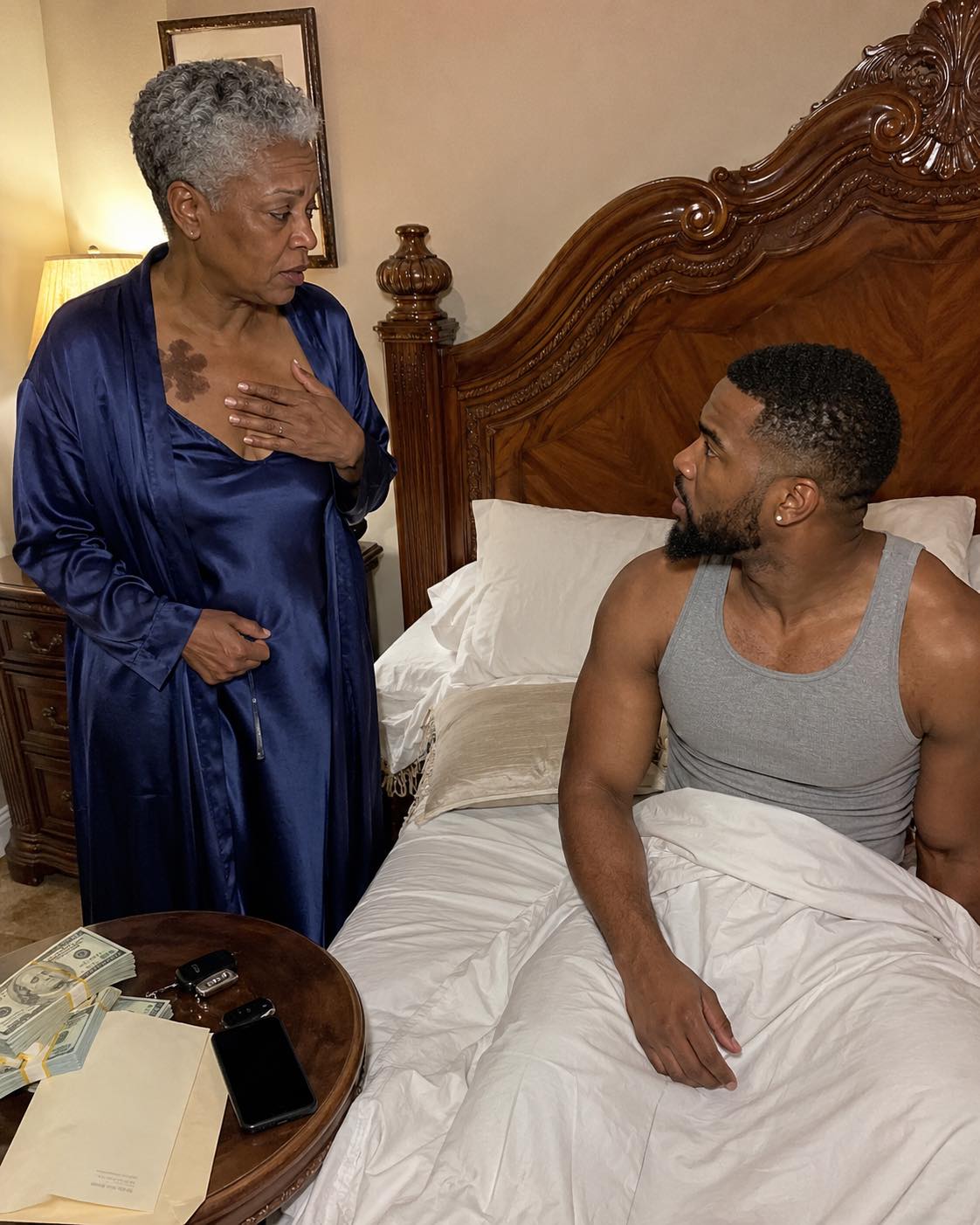
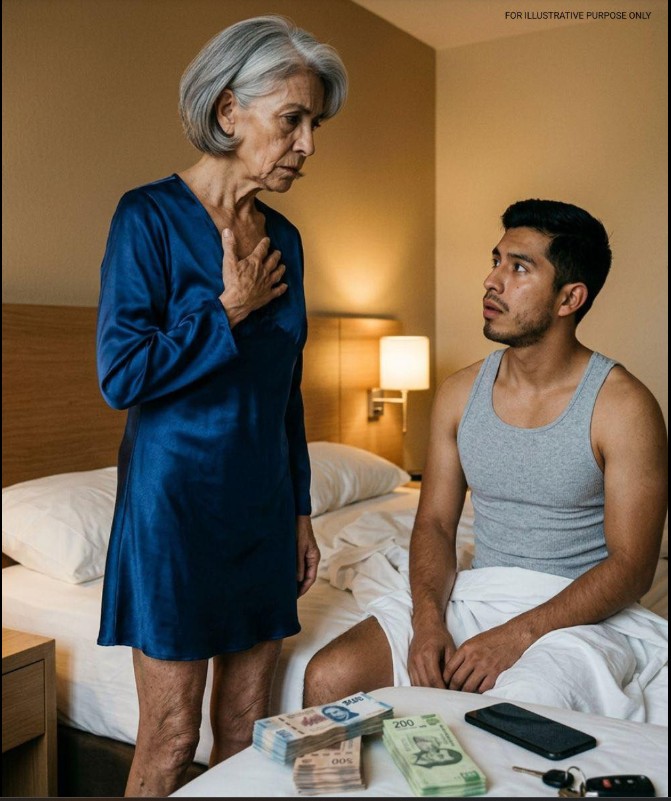
“Todos me llamaban loco por casarme con una mujer de 60 años”, pero en nuestra noche de bodas vi una marca en su hombro, escuché “Tengo que decirte la verdad” y comprendí que toda mi vida había sido una mentira.
PARTE 1
“¡Prefieres casarte con una mujer de sesenta años antes que encontrar una chica decente!”
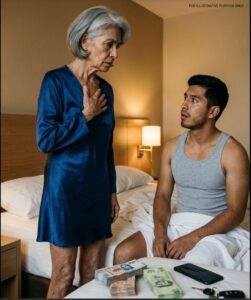
Eso fue lo que mi madre me gritó en medio del patio, delante de mis tíos, los vecinos e incluso del repartidor de gas.
Me llamo Efraín, tengo veinte años, mido un metro ochenta y nací en un pequeño rancho de Guanajuato donde todo el mundo lo sabe todo antes de que lo hayas vivido. A mi edad, la mayoría de mis amigos pensaban en motos, cerveza y chicas de su clase. Yo, en cambio, me había convertido en el chismoso favorito del pueblo porque iba a casarme con Doña Celia.
That’s what everyone called her, not because she was a grandmother, but because she commanded respect. She always dressed elegantly, spoke softly, and looked at people as if she truly understood them. She had money, yes, but she was never one to humiliate others by driving an expensive truck. I met her welding a fence at a house she had bought on the outskirts of town. I burned my hand because I was clumsy, and while everyone else was laughing at me, she was the only one who came over with water, some ointment, and a calmness that disarmed me.
From that day on he started treating me differently.
She lent me business books I could barely understand. She taught me how to pronounce English words without making me feel ignorant. She talked to me about small investments, about saving, about thinking ahead. No one my age had ever made me look so far. With her, for the first time, I felt that my life could be bigger than the workshop, the debts, and the parched earth of my house.
And yes, I fell in love.
Not her dresses. Not her house. Not her money.
I fell in love with the way he listened to me as if I were worth something.
When I confessed at home, I almost got kicked out.
“That woman has you under a spell,” my aunt said.
“What you want is a mom, not a wife,” my cousin spat.
“He’s going to use you and then throw you away,” my father said, hurt.
But I held on. I fought for her. I defended her in front of everyone. And even though the whole town labeled me as ambitious, crazy, or a freeloader, I didn’t back down.
The wedding was at a former hacienda , lit with candles, decorated with white, and featuring musicians playing as if it were a party for powerful people. There were too many men dressed in black, too many radios in their ears, too much security for a simple wedding. I noticed it, yes. But I was so blinded by what I felt that I decided not to ask.